Posts

Showing posts with the label Regal Blue Tang

Marine Creature of the Month: Best of 2019
Image
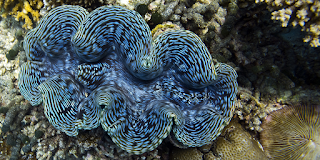
December is a time to look back and reflect on the year. So, I am taking the opportunity to look back on all the critters featured on #MCotM this year! February: Giant Clam They live in the Indo-Pacific Ocean, found in tropical waters and reefs like the Great Barrier Reef. They like warm waters, no deeper than 20m (66ft), so it is nice and light for them. This is because they have a symbiotic relationship with algae, who rely on photosynthesis for food. Giant clams are the biggest species of clam, growing up to 120cm (47") and weighing up to 200kg (440lbs). It is believed they can live up to 100 years. They are, unfortunately, being hunted to extinction by humans - for profit and food. It is the only species of clam which cannot completely close its shell. March: Nautilus The nautilus is a type of cephalopod, which is the same family as squid and octopus. They have been around since there were dinosaurs on the planet, making them something of a ...
Marine Creature of the Month Oct'19

Image
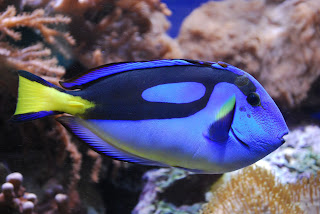
Marine Creature of the Month Famous Fish: Dory Photo from Wikipedia Kingdom: Animalia Class: Actinopterygii Conservation Status: Least Concern (LE) WHAT IS DORY? Dory, from Finding Dory , is commonly known as a Regal Blue Tang. She is a surgeonfish, indigenous to the Indo-Pacific ocean. They are flat fish, with a circular shaped body that ends in a pointed snout, the average adult blue tang growing to 30cm (12in). They have the distinct blue and black colouring, with more yellows coming through in the central Indian ocean populations. With their home being in the Indo-Pacific ocean, blue tangs are found in reefs around many countries, such as Japan, Indonesia, and the Great Barrier Reef around Australia. They are a common and abundant fish in these areas. They live in either pairs or small groups between eight and fourteen. The males are generally bigger than the females, on average an adult blue tang weighs only 600g (21oz). Photo from Live Sci...